AI is a tsunami, it’s coming. The question is not whether you’ll ride the wave, but how well you’ll ride it.
AI is one of the most transformative technologies of our time. It’s revolutionizing industries, unlocking new efficiencies, and driving innovation.
But with great power comes great responsibility. The enthusiasm surrounding AI often comes with concerns about its fairness, transparency, and long-term impact on jobs and society.
The challenge for businesses isn’t just about harnessing AI’s capabilities, it’s about doing so responsibly. Incorporating AI governance, explainability, and compliance is how companies ensure they ride the wave effectively without losing control.
AI makes your job better: Empowerment, instead of replacement
One of the biggest misconceptions about AI is that it’s designed to replace people. In reality, AI is about empowerment, it’s about helping people make smarter decisions, faster, and with more insight.
Take OOE dashboards, for example. They give you the data, but what do you do with it? AI doesn’t just deliver information; it turns data into actionable insights, helping people interpret and act on that information.
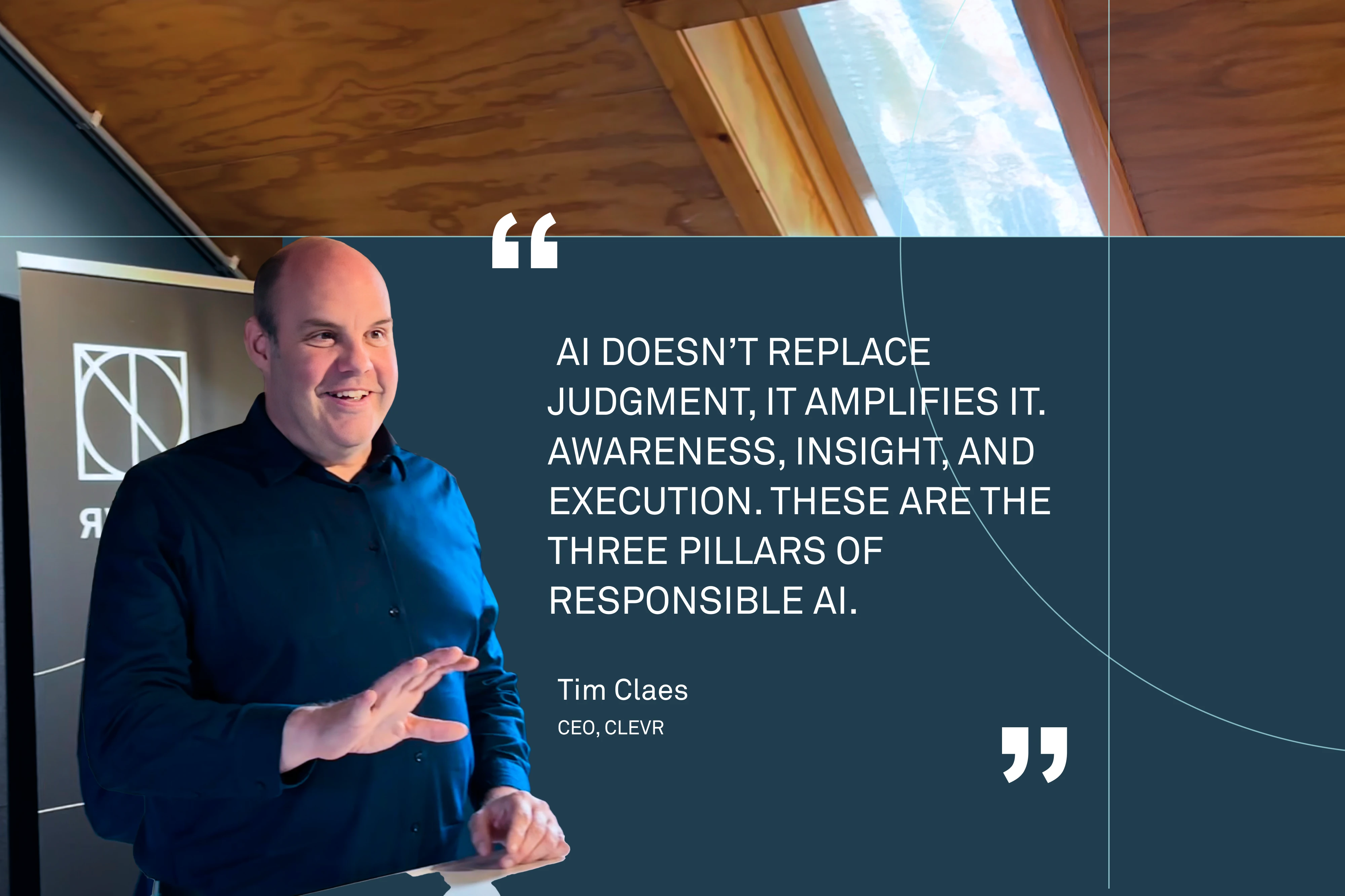
The real value of AI lies in its ability to amplify human judgment, not replace it. AI supports the human decision-making process by filtering through data, suggesting options, and predicting outcomes, but ultimately, humans remain in the driver’s seat.
Building a responsible AI-driven organization
1. Michael Wade’s three core capabilities for responsible AI
To successfully navigate AI’s integration into business, leaders must embrace Michael Wade’s three core competencies:
Hyperawareness
AI allows businesses to sit on a goldmine of data. To harness this power, companies must be aware of how and where data flows through their systems. This awareness leads to more informed, proactive decisions.
Information-based decision thinking
AI empowers leaders to move beyond intuition. With data-driven insights, leaders can make decisions that are grounded in reality, not just experience. This thinking is key to unlocking AI’s true potential.
Fast execution
AI helps organizations respond faster to changing market conditions, enhancing agility. It’s about scaling decisions quickly, adapting processes, and innovating at speed, all while keeping the core intact. Fast execution is where human oversight meets AI’s analytical power.
These capabilities form the foundation for responsible AI adoption, but awareness and speed mean little without trust.
2. Establish explainability to build trust in AI
AI works best when people trust it. But trust doesn’t come automatically. If AI decisions aren’t explainable, it’s easy for businesses to lose credibility.
Explainability ensures that everyone involved, from employees to customers, understands how decisions are being made.
In sectors like banking, healthcare, or manufacturing, where decisions directly impact people’s lives, this trust is critical. When this explainability is embraced, AI models become more transparent and understandable. This clarity builds trust, making AI an enabler of responsible innovation, not a black-box risk.
3. Create strong governance to guide AI use
As AI systems become more integrated into business processes, governance plays a pivotal role. AI is not just a technology to be deployed in isolation; it’s a strategic capability that must be managed and overseen at every level of the organization.
Without strong governance, AI can quickly become a risk rather than an asset. This governance framework ensures that AI is used within ethical boundaries, aligning it with the company’s values and strategic goals.
Leaders must establish clear guidelines on how AI is implemented, who is responsible for decisions, and how it is regulated. By setting up proper governance, businesses can mitigate risks like bias, unethical behavior, and unintended harm.
4. Make AI a Sstrategic capability, not a technical project
AI is too important to be treated merely as a technical experiment. For AI to deliver real enterprise value, it must be integrated into the company’s strategic goals.
Too often, AI is treated as a standalone project or a technological trend. Implementing AI without a clear vision for how it aligns with business operations can lead to fragmented deployments.
AI isn’t just about technology; it’s about strategy.
The key to scalable AI adoption is treating AI as a strategic enabler for business transformation. Leaders must ensure that AI aligns with the company’s long-term vision and drives improvements in efficiency, customer satisfaction, and sustainability.
5. Lead the organization toward AI adoption and trust
The success of any AI initiative depends on leadership. Without strong leadership, AI can quickly become a tool for unintended consequences, such as bias, or loss of control.
It must be ensured that AI is deployed responsibly, as a tool to enhance decision-making, not just efficiency or profit.
Leaders also need to provide the guidance and framework to allow employees to trust AI. This means fostering a culture where AI amplifies human judgment, rather than replacing it. When AI is seen as a tool for empowerment, helping people make better decisions, faster, and more accurately, it becomes a force for positive transformation.
AI doesn’t replace judgment, it amplifies it
AI doesn’t replace human decision-making; it supports and amplifies it. Integrated into business operations, AI doesn’t take over decisions, it provides the context and insight to make them better.
The future of AI lies in collaboration between human intuition and machine learning. As long as the human factor stays in the driver’s seat, organizations can trust AI to enhance, not erode, control.
Ultimately, responsible AI isn’t just about algorithms or compliance, it’s about people trusting technology enough to use it wisely. AI empowers people to act with greater clarity, not less control. That’s the real measure of transformation.
Originally published here.

Find out how CLEVR can drive impact for your business

FAQ
Can't find the answer to your question? Just get in touch
