In the manufacturing sector, AI is rapidly becoming the tool that connects the dots between design, production, and maintenance. From design optimization to predictive maintenance, AI is revolutionizing the product lifecycle by enabling smarter, more efficient processes.
But for AI to realize its potential, it needs to be deeply embedded in the Product Lifecycle Management (PLM) system.
1. PLM: The foundation AI needs to create real value
PLM serves as the central data backbone for product data. Whether it's from design, production, or after-sales service, PLM is the data thread that connects all stages of the product lifecycle. When AI taps into this thread, it can significantly enhance product development and lifecycle management.
For example, AI-powered algorithms can now help optimize designs, making them lighter, cheaper, and stronger, all in one go. These algorithms evaluate multiple parameters, offering new insights and potential product innovations that were previously too complex to calculate manually. The result is a more intelligent, adaptive design process.
2. Digital Twins & Generative Design: Where AI supercharges engineering
A key area where AI adds immense value is through digital twins and generative design. Digital twins allow manufacturers to simulate and monitor products in real-time, creating a digital replica of a physical product. AI models leverage this data to predict and prevent issues, optimizing designs before they even reach production.
Generative design, another AI-powered innovation, enables the creation of thousands of design alternatives based on specific parameters. AI continuously learns from the data, refining these alternatives to create designs that are both efficient and innovative, adapting to real-world conditions.
3. Beyond Design: AI in maintenance, operations & sustainability
AI isn’t just improving the design phase. It’s transforming how companies maintain and service their products as well.
Predictive maintenance powered by AI allows manufacturers to predict when a machine or part will fail, preventing downtime and reducing costly repairs. AI analyzes data from sensors, identifying patterns and anomalies that indicate potential failures before they occur. This predictive approach helps reduce operational costs and extend the life of machinery and products.
Furthermore, AI is increasingly being integrated into the efforts to improve sustainability and circularity. By optimizing product lifecycles and making it easier to measure and reduce waste, AI offers manufacturers the tools they need to meet ever-growing sustainability demands.
4. AI as a Service: Bridging the digital thread and business processes
AI doesn’t exist in a vacuum. It needs to be integrated not only into core systems like PLM but also into the business processes that define how an organization operates. AI as a service within the IT architecture ensures that AI can be deployed across the organization without disrupting core systems.
The real power of AI is realized when it becomes a part of the operational processes of the business. Whether it’s through AI-enabled supply chain resilience, design optimization, or real-time maintenance predictions, AI turns insight into action. This integration ensures that companies are not just experimenting with AI, but leveraging it to create lasting value.
Making AI work: Where architecture meets leadership
When AI, PLM & Low code work together
By combining PLM, AI, and low-code platforms, companies can create a dynamic, scalable architecture that supports continuous improvement. AI moves beyond just providing insights, it becomes part of the operational fabric that drives faster, smarter decisions across all stages of the product lifecycle.
In the same way that PLM became the license to innovate for product design and manufacturing, AI is becoming the license to improve and scale operations, offering companies a path to both sustainability and competitive advantage.
The human factor
While AI makes processes smarter and more efficient, it’s crucial to remember that the human element remains essential. AI supports but doesn’t replace human decision-making. Strategic leadership is required to guide AI’s implementation, ensuring it aligns with the business’s overall vision and goals.
AI empowers teams by reducing repetitive tasks, improving decision-making, and offering data-driven insights. But ultimately, it’s the leadership and the people within the organization who make the final decisions, turning AI’s potential into tangible outcomes.
From complexity to clarity
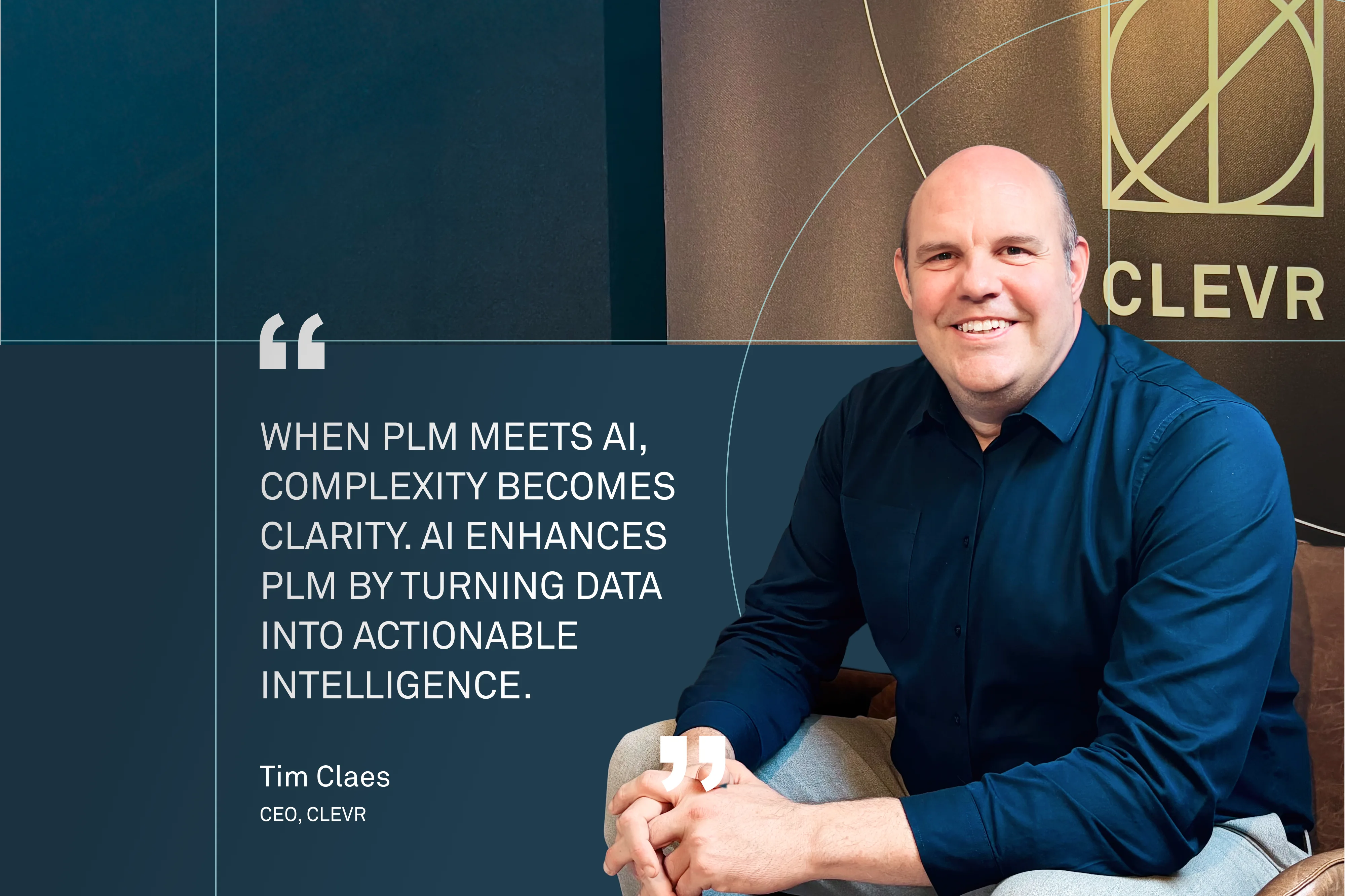
When PLM meets AI, complexity becomes clarity. AI unlocks value at every stage of the product lifecycle, from design and production to maintenance and sustainability.
By leveraging the full power of AI within a solid PLM framework, companies can move from experimentation to execution, creating long-term value and driving innovation.
Originally published here.

Find out how CLEVR can drive impact for your business

FAQ
Can't find the answer to your question? Just get in touch
