Every AI conversation in industry right now circles the same uncomfortable question: we have invested, we have piloted, we have demoed, so where is the value? At Realize LIVE 2026, Siemens gave its answer. It's called Intelligence Center X (ICX) and for everyone building on Mendix, it's the moment the platform steps into a new role: from low-code development platform to the agentic heart of Siemens' industrial AI strategy.
From vision to product: Realize LIVE 2026
Siemens CEO Roland Busch has delivered one consistent message on every major stage in 2026: industrial AI is leaving the lab. Siemens, in his words, is delivering "AI-native capabilities, intelligence embedded end-to-end across design, engineering and operations", not AI as a bolt-on assistant, but intelligence woven into how products are designed, built, and operated.
At Realize LIVE Americas 2026 in Detroit (June 1–4), that message became a product. In front of roughly 3,000 users and partners, Tony Hemmelgarn, President and CEO of Siemens Digital Industries Software, announced Intelligence Center X: industrial AI orchestration software designed to turn AI from isolated experimentation into scalable, governed business impact with the Mendix platform at its core.
A few weeks later, at Realize LIVE EMEA in Amsterdam, the topic was impossible to escape. Whether the session was about Teamcenter, Opcenter, simulation, or Mendix itself, every conversation kept returning to the same question: how do we make our processes intelligent, safe, at scale, and with proof that it works?
The real problem: four gaps between AI ambition and AI value
Why a new "Center" alongside Teamcenter X, Simcenter X, and Opcenter X? Because across industries, AI initiatives keep stalling in the same four places.
Gap #1 – Software agents are vulnerable
Agentic AI is powerful precisely because it acts autonomously and that is also its risk. An agent that reads enterprise data and triggers actions can be misled by stale data, manipulated inputs, or ambiguous instructions. Hemmelgarn quoted one customer CEO in Detroit: "The last thing I need in my organization is for AI to go grab and lock on to a SharePoint location that's 20 years old." An agent confidently acting on untrusted data isn't automation; it's a liability.
Gap #2 – Shadow AI and limited oversight
Teams don't wait for IT. Engineers wire up their own copilots, departments subscribe to point solutions, and someone in quality is already running a model nobody approved. The shadow IT problem of the early cloud era is repeating itself with AI, faster and with higher stakes. The result: ungoverned agents that IT can neither see, secure, nor switch off.
Gap #3 – Workflows and agents have no audit trail
When a human approves a change, PLM captures who, when, and why. When an AI agent recommends absorbing a cost instead of redesigning a part, who signed off? On what data? Under which policy? Most AI experiments cannot answer these questions, and for regulated industries that is disqualifying.
Gap #4 – Fragmented visibility across the portfolio
Even organizations with successful AI use cases usually can't see them as a whole. One model in manufacturing, one agent in the supply chain, a copilot in engineering, each with its own data connection, owner, and definition of success. There is no single place to see which agents exist, what they may do, and what they deliver.
How Intelligence Center X closes the gaps: four parts, one trust layer
Intelligence Center X treats these gaps as one architectural problem, bringing four capabilities together on a single governed foundation and if you know Mendix, you already know half of the stack.
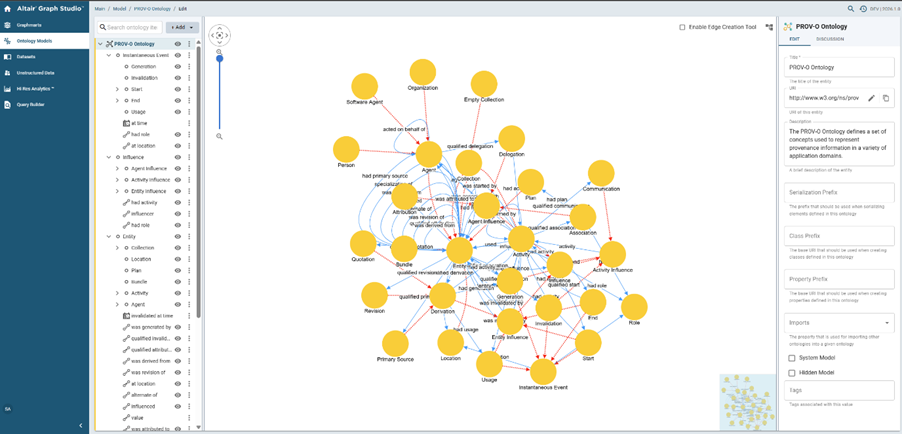
1. Knowledge graph with Graph Studio
Graph Studio builds the enterprise knowledge graph: it connects data from engineering, manufacturing, supply chain, and service, and sets up an ontology between them, a living semantic model that gives every data point meaning and relationships. Out-of-the-box industrial ontologies accelerate the start. This context layer is what closes Gap #1, agents reason over connected, current, trusted data instead of stale copies in data lakes.
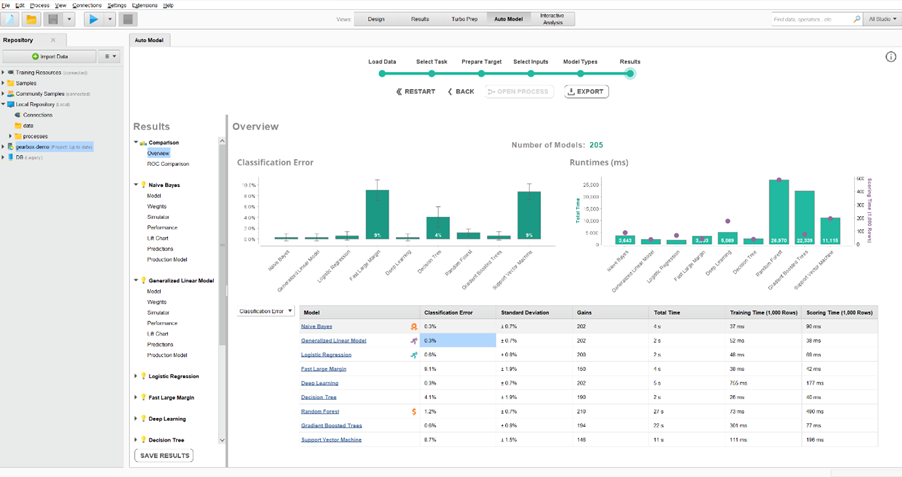
2. Machine learning with AI Studio
AI Studio is where data scientists and engineers build, train, and operate machine learning models, grounded directly in the data contextualized by the knowledge graph. Instead of exporting data into yet another isolated ML environment, models connect natively to the governed graph, so predictions inherit the same context and lineage as the data they were trained on.
3. Agentic development with Mendix
This is where intelligence becomes actionable and where Mendix shines. Teams build the applications and AI agents that put insights to work: human-in-the-loop apps on the shop floor, autonomous agents for routine decisions, and everything in between. Agents are modeled, versioned, and deployed like any other Mendix artifact visible to IT and governed from day one. That is the structural answer to shadow AI (Gap #2), a sanctioned, productive place to build agents beats a ban every time. And for existing Mendix landscapes, integration into the ICX tooling is refreshingly non-dramatic. Your apps, modules, and DevOps pipelines connect to Graph Studio context and AI Studio models through standard connectors and the Model Context Protocol (MCP), not a rip-and-replace migration.
4. Process orchestration with Mendix Workflows
Individual agents create tasks, orchestrated agents create value. Mendix Workflows coordinates people and agents in end-to-end business processes: an agent detects an anomaly, a workflow routes the finding, a human approves the action, an agent executes it. Every step is part of one traceable process definition, which is exactly what turns AI from a side experiment into an operating model.
The foundation: an enterprise trust layer. Everything above runs on a shared trust layer that answers Gaps #3 and #4 and makes the system enterprise-ready. It provides:
- guardrails defining what agents and humans may do and when a human must step in
- traceability through end-to-end logging of every action, so every decision has an owner, a timestamp, and a data lineage
- security built on a pen-tested platform with a hardened runtime and real-time anomaly detection
- ready-to-use governance with policies, integrated DevOps, Identity & Access Management, and the Control Center as a single pane of glass across the entire portfolio
Proof it works: Vivix
None of this is theoretical. Vivix Vidros Planos, Brazil's leading flat glass manufacturer, built its flagship "Smart Furnace Monitoring" initiative, watching over a $120 million furnace, on nearly 30 Mendix applications connecting OT and IT data across SAP S/4HANA, Siemens Industrial Edge, and Snowflake. On top sits their AI-powered Virtual Engineer: an assistant that gathers product, production and process data, and gives quality and production teams tailored suggestions, so they act proactively instead of reactively. It is built on Mendix with Amazon Bedrock and Claude from Anthropic.
The results ended the pilot-purgatory debate: an 85 percent reduction in production issue resolution time, 6,000 hours of manual work recaptured in a single year, customer complaint resolution compressed from five days to under one, and up to 4x faster resolution in quality-related investigations, recognized with a Siemens Techcellence Award and an AWS GenAI Gamechanger award. Mendix is the layer that made the intelligence actionable, turning connected data and models into applications people use every day.
Mendix 11.12: the first LTS release ready for agentic production
Announced around Realize LIVE EMEA, Mendix 11.12 turns the agentic promise into something you can put into production, because it is the first Long-Term Support (LTS) version of Mendix 11, the first LTS since 10.24. That matters more than any single feature.
Mendix best practice is clear: production applications belong on LTS versions, where you get a stable, long-supported foundation instead of chasing monthly releases. Until now, teams that wanted Mendix's agentic capabilities had to build on moving ground. With 11.12, agentic development is LTS-grade for the first time, meaning you can build agents and take them to production following the same release discipline you already apply to your business-critical apps. The release also delivers Agents Kit 2.0 with the Agent Editor in Studio Pro, built-in MCP server and client components, big performance gains (25–40% faster project loads, up to 6x faster error checking, up to 8x faster local deployments), and embedded Mendix workflows inside Teamcenter Active Workspace.
Mendix 11.12 highlight: Maia
The single biggest reason 11.12 feels like a step change is Maia, Mendix's AI assistant, now woven through the development lifecycle.
Describe the solution, and Maia helps build it. You start from intent rather than a blank canvas: you explain what the solution should do (the process, the data, the outcome) and Maia generates the structure to match. Maia Plan turns that into epics and user stories (flowing straight into your Jira backlog), and Maia Make begins implementing the scoped work in Studio Pro. You direct; Maia drafts.
Maia's value isn't a one-shot code dump. It works alongside you throughout the build, actively supporting your own development, suggesting the next step, filling in the repetitive parts, catching gaps, while you stay in control of the design. It behaves like a capable pair-programmer who never tires of the boilerplate.
Additionally, low-code makes the output reviewable. What Maia produces is a Mendix model, not thousands of lines of raw code, and a model is far easier to read, review, and reason about than hand-written code. You see the microflow, the page, the workflow, the data model at a glance and immediately judge whether it's right. This is also the core benefit of low-code in the AI era: AI allows companies to move fast, while making it possible for a human to meaningfully verify the result. Speed without a black box.
A personal note on live demos. It changed my own experience. In the past, a live demo meant coding on the fly, explaining, and hoping nothing breaks, all at once. Now I prepare user stories ahead of time and simply run them during the demo, and walk the audience through each task and its result calmly. The demo went from a tightrope act to a conversation, from performing under pressure to explaining with confidence.
Mendix as an MCP server for other tools
Maia is the built-in path, but not the only one. Because 11.12 ships with MCP support, a Mendix application can act as an MCP server, exposing its logic, data, and workflows as tools that other AI clients can call. You are not locked into a single assistant: your governed Mendix capabilities can be consumed by another agent or tool of your choice, while still running behind the ICX trust layer. This is precicely the difference between an AI feature and an open, interoperable AI platform.
Integrating and orchestrating AI agents with Mendix
The same openness runs in the other direction. Mendix doesn't just expose tools, it consumes them, using its MCP client to bring external AI agents and services into your applications. That lets you combine best-of-breed agents from different providers, and then do the part that really matters: orchestrate them with Mendix Workflows. Rather than a loose collection of agents each acting on its own, you get coordinated, human-in-the-loop processes where Mendix decides which agent runs when, hands off between agents and people, and keeps every action inside the governed, auditable trust layer. Mendix becomes the conductor of your hybrid workforce, not just one more instrument in it.
Personal takeaway
Intelligence Center X is, to me, a genuinely strong concept: it connects the data of very different systems and makes it usable for a whole range of scenarios, AI foremost among them. And within that concept, Mendix is the key player. The combination of agentic development and low-code is what makes the difference. It lets you build AI-driven solutions fast, but also review, govern, and trust what you've built. That balance of speed and reliability is exactly what enterprise software needs and it makes Mendix a strong partner for reliable, efficient software solutions in the age of industrial AI.

Find out how CLEVR can drive impact for your business

FAQ
Can't find the answer to your question? Just get in touch
